Master of Opera and Voice
Course content
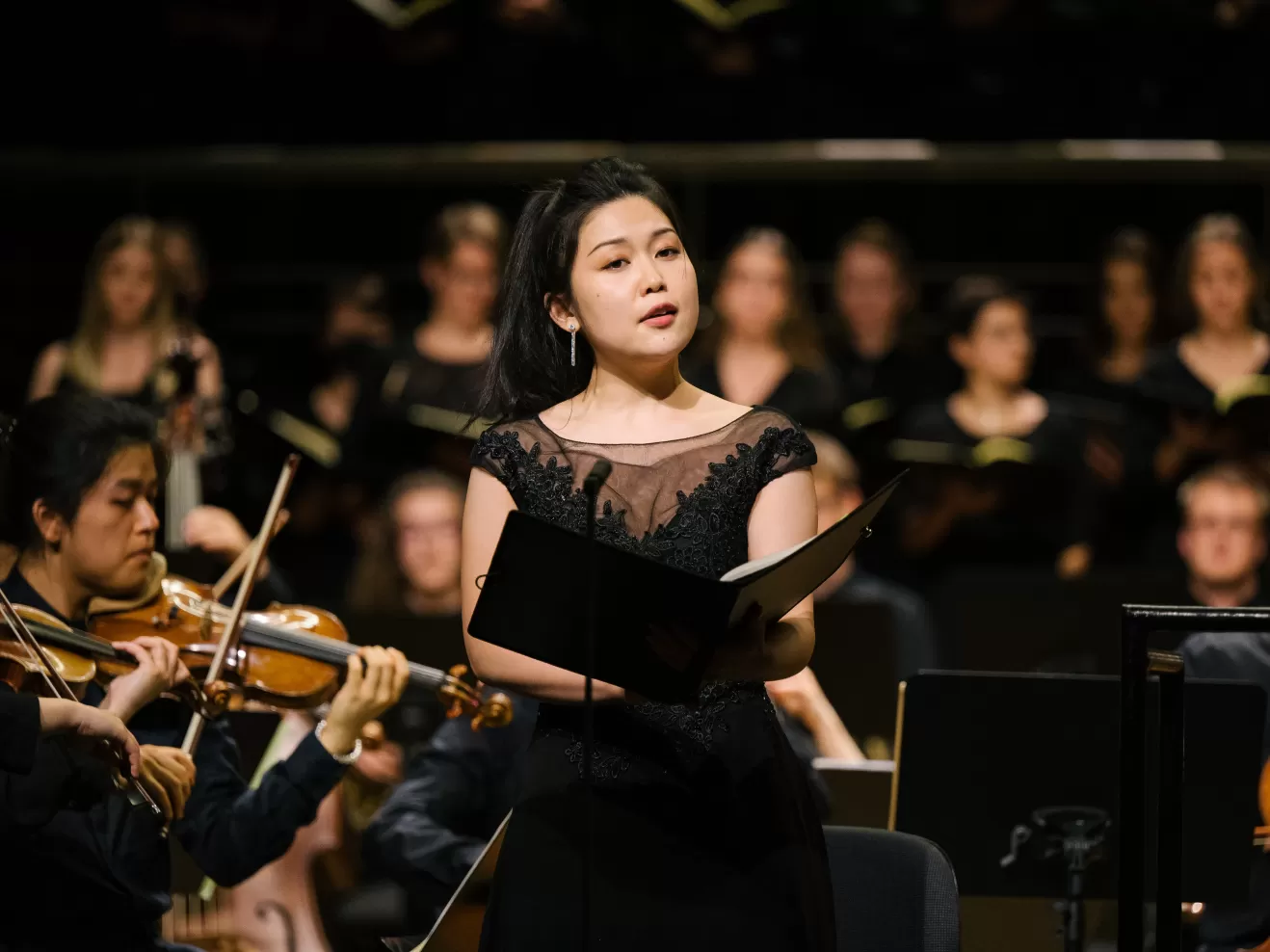
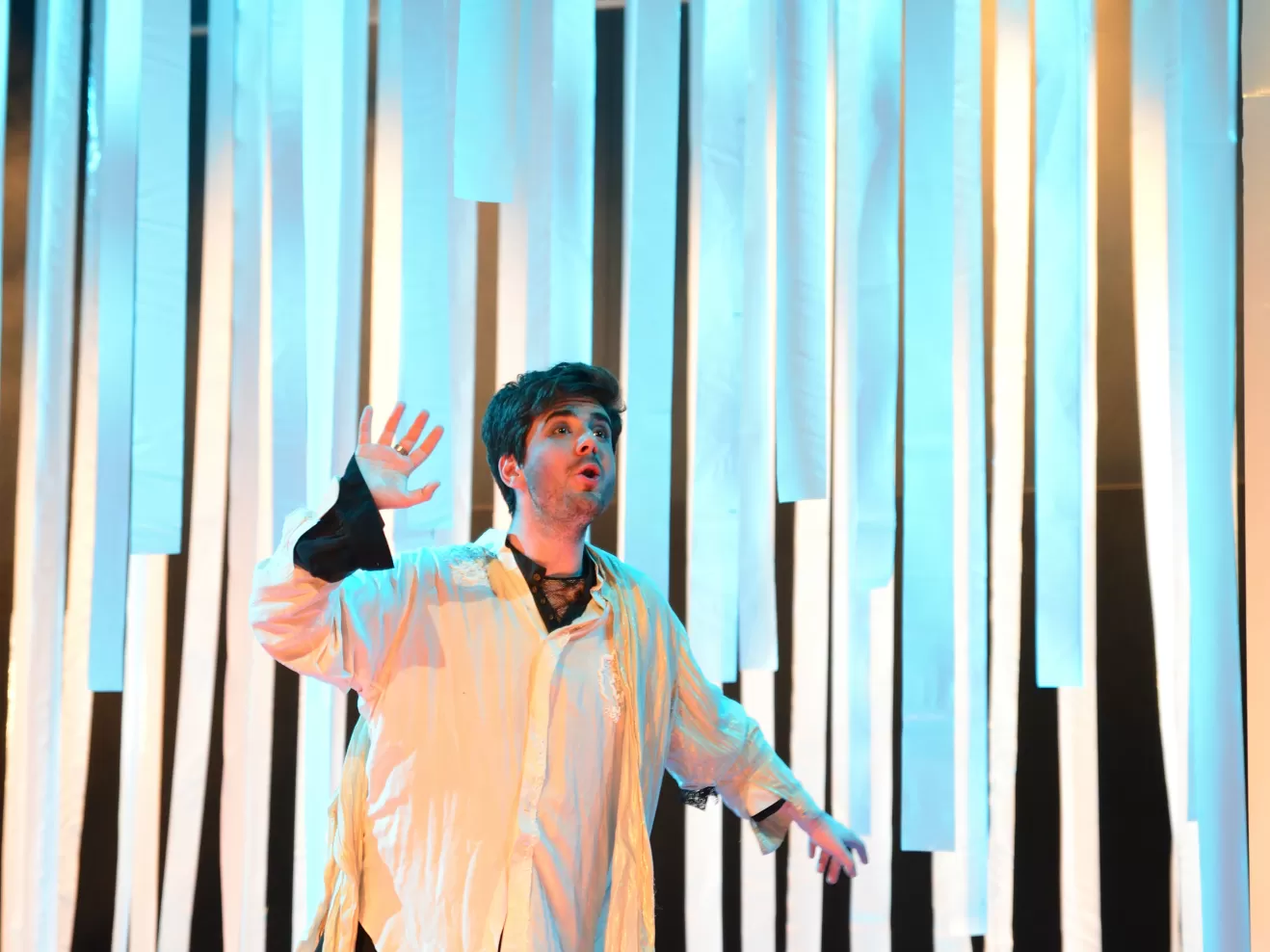
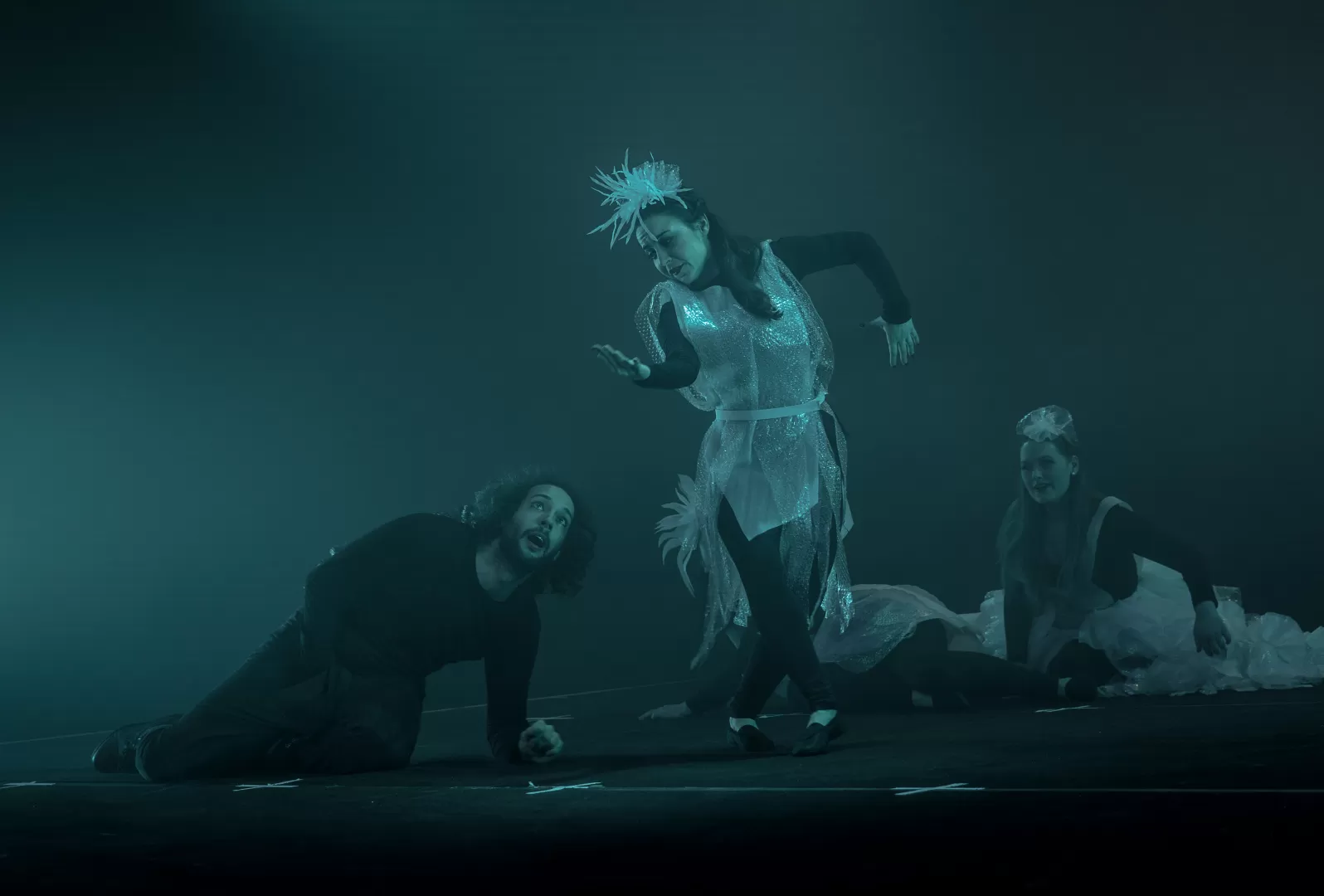
Graduates of the Master of Opera and Voice acquire the skills they need to be successful professional singers. The HfMDK Frankfurt offers a wide range of courses, from specific workshops on stylistic or performance aspects to full opera performances in front of an audience. Close cooperation with the region's stages and theaters, in particular the Hessian Theatre Academy (HTA), is an integral part of the course and is supplemented by regular professional auditions. Students acquire a profound vocal technique and skills in various genres of musical theater.
Deepen your own interests in the elective area
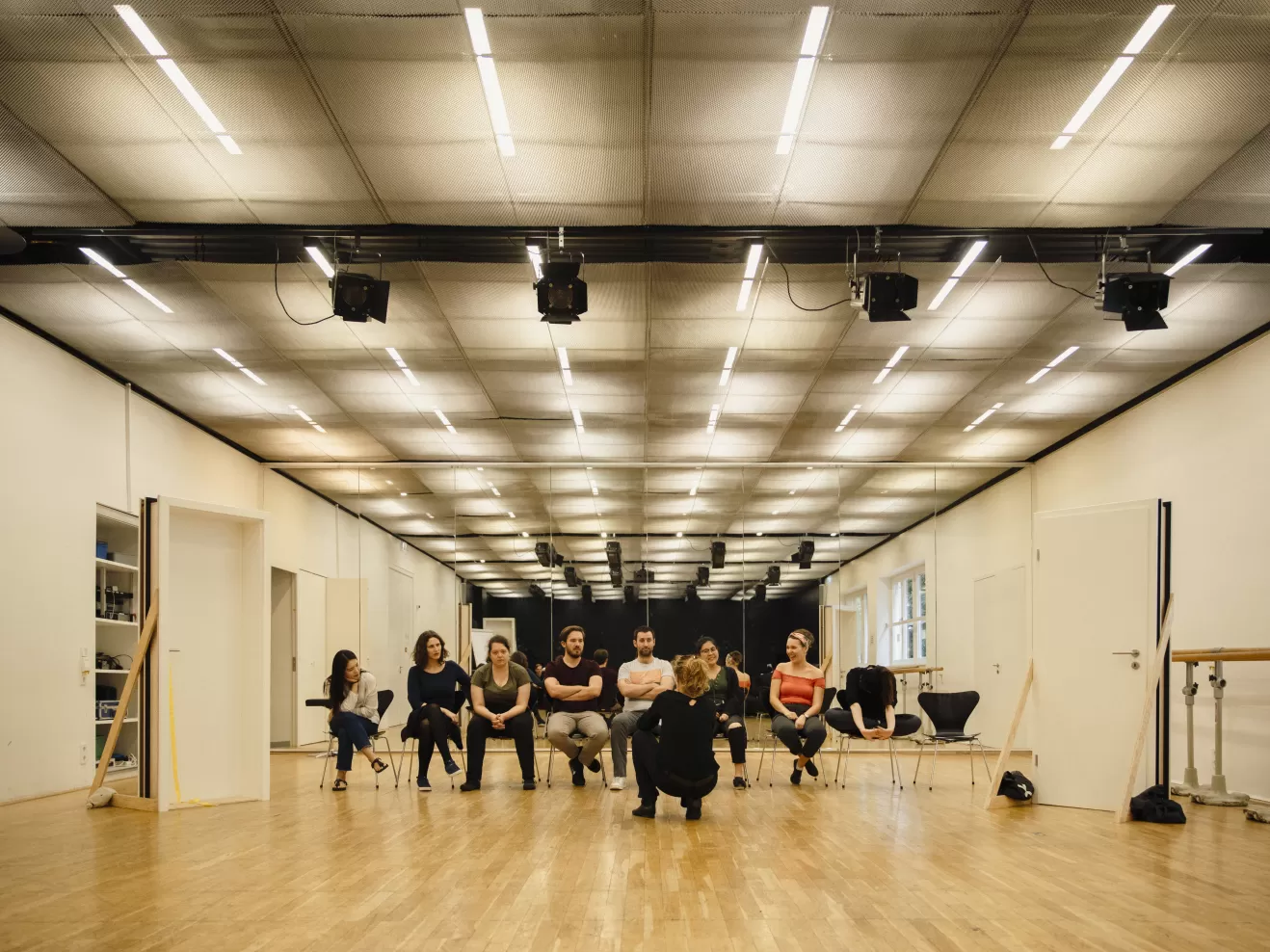
The central element of the course is a close combination of content from the areas of singing, scenic presentation, body work, musical (ensemble) work, in-depth (foreign language) accompaniment and the teaching of dramaturgical content knowledge. They are usually expressed in a public performance format. In addition, there is a wide range of electives in which students can continue their education according to their individual interests. This also includes pedagogical, concert and stylistically specialized courses (early and contemporary music). Students can deepen their interests in the field of contemporary music (in cooperation with the IzM) and/or historical interpretation practice (in cooperation with the HIP department).
Networking, support and team teaching
The personal and individual support of students is also ensured through various team teaching formats and through a close exchange between teachers and students.
By developing comprehensive skills, students are enabled to adapt to the constantly changing professional field and to successfully contribute to the changing musical theater landscape both as soloists and in ensembles in all performing and musical forms. Through the intensity, breadth and conceptual combination of courses, project work and independent study time, students are enabled to take on responsibility in the various fields of work.
In 2011, the vocal department of the HfMDK was awarded the Hessian Excellence Prize for University Teaching.
Note: We offer a Master Concert (Classical Voice) for students who wish to become concert singers.
Dates & deadlines
Aptitude tests for winter semester 2025/2026*
*You will receive details of your aptitude test dates with your invitation approx. 3 to 4 weeks before your aptitude test appointment.
WiSe = winter semester // SoSe = summer semester
Requirements
Admission to the Master of Opera and Voice requires a degree from a university of music or a comparable university in Germany or abroad with a major in singing or a comparable degree, sufficient knowledge of the German language (B2 for non-native speakers), an ENT certificate and a passed aptitude test.
ENT certificate
- The ENT certificate must be issued by a specialist in phoniatrics and prove the vocal physiological suitability for a singing course.
- The ENT certificate must not be older than six months at the time of application.
- If you are unable to obtain the ENT certificate before March 1, please submit it by e-mail by June 15.
- Foreign certificates will also be accepted, provided you enclose a translation into German.
- We may also ask you to submit a phoniatric certificate at a later date.
Application
What do I need for the application?
Language Certificates
Here you will find a list of required German and/or English language skills for all degree programs. Please check which of these requirements apply to your degree program.
Digital preselection
The aptitude test for the Master of Opera and Voice includes a digital pre-selection in accordance with §11 of the aptitude test regulations.
For the digital preselection, the following must be submitted as a video as part of the online application:
- 3 arias (at least one of them staged)
- Self-disclosure (1 to 2 minutes): You state your name, briefly introduce yourself and your musical career and describe your motivation for studying for a Master's degree in Music Theater at the HfMDK Frankfurt
Important notes:
The program must be performed from memory.
Please upload your videos to a streaming platform of your choice (e.g. YouTube, Vimeo, Clouds, etc.). The videos must be accessible without a password and must be able to be streamed without downloading the file. Please create one video file per work. Please submit the links to the videos with your online application.
Aptitude test
We recommend that you are under 28 years of age at the start of the Master's degree course of Opera and Voice.
The program can only be carried out on the basis of good linguistic communication skills, which is why a good knowledge of German is a prerequisite for the vocal program.
If you pass the digital pre-selection (see above), you will be invited to the first attendance round, which will be carried out unchanged on the basis of the full program.
The examination takes place in two attendance rounds of approx. 10 minutes and 25 minutes each and can therefore extend over several days. In each round, the commission selects from the repertoire submitted and, if necessary, performs scenic and/or musical exercises. If the suitability appears possible in the first round, an invitation to the second round will be extended.
In addition, it will be checked on the basis of files (academic achievements from the previous course(s)) whether the applicant has sufficient knowledge of Italian. If not, the examination board may issue an obligation to take further Italian courses as part of the elective area.
The committee also decides on the allocation to courses with German phonetics and diction, basic scenic skills and basic knowledge of the International Phonetic Alphabet.
Further provisions regarding the aptitude test and other admission requirements are governed by the aptitude test regulations of the University of Music and Performing Arts in their current version.
Program to be submitted
A program consisting of the following parts must be submitted:
- 4 opera arias or scenes (including at least one aria with recitative and two arias with scenic presentation)
- One duet, to be chosen from the list below: "Duet repertoire"
- Two songs
- A prepared prose text or a poem in German of a maximum length of 3 minutes, to be performed from memory and presented in a playful manner.
Important notes
- The program must be performed from memory.
- The repertoire must be performed in the original language. In addition to German, it should contain at least 2 other languages
- Opera arias and songs should cover at least 3 stylistic periods, including
- at least one composition by Mozart or Haydn
- a composition after 1970 or a work of the 2nd Viennese School (This refers to works composed (after 1908) by the Second Viennese School and its followers that are composed free-tonally or dodecaphonically. In this sense, works composed before 1970 by Messiaen, Dallapiccola and others are also admissible).
- Scenic and musical exercises or improvisations, also in a group, as well as a discussion will take place as determined by the examination board.
Duet repertoire
Lesefassung: Eignungsprüfungsordnung der HfMDK Frankfurt
[Nicht-amtliche Lesefassung. Stand: 27.10.2025]
Study and Examination regulations
The Study and Examination Regulations (SPO) set out the framework conditions and regulations for your studies. They apply together with the General Regulations (for Bachelor's and Master's degree programmes) or the SPoL (for teacher training degree programmes). All versions of the SPO for your degree programme (including earlier versions for students of previous academic years) can be found at Examinations.
Lesefassung: Allgemeine Bestimmungen für Bachelor- und Masterstudiengänge der HfMDK Frankfurt
Stand: 27.05.2019
Lesefassung: Studien- und Prüfungsordnung für den Masterstudiengang Gesang Musiktheater
Diese Fassung gilt
- für alle Studierende mit Studienbeginn ab Wintersemester 2026/27
- für alle Studierende, die nach der SPO vom 12.12.2023 studieren und den Wechsel auf diese Änderung beantragen.
Nicht-amtliche Lesefassung 2023+1Änd26