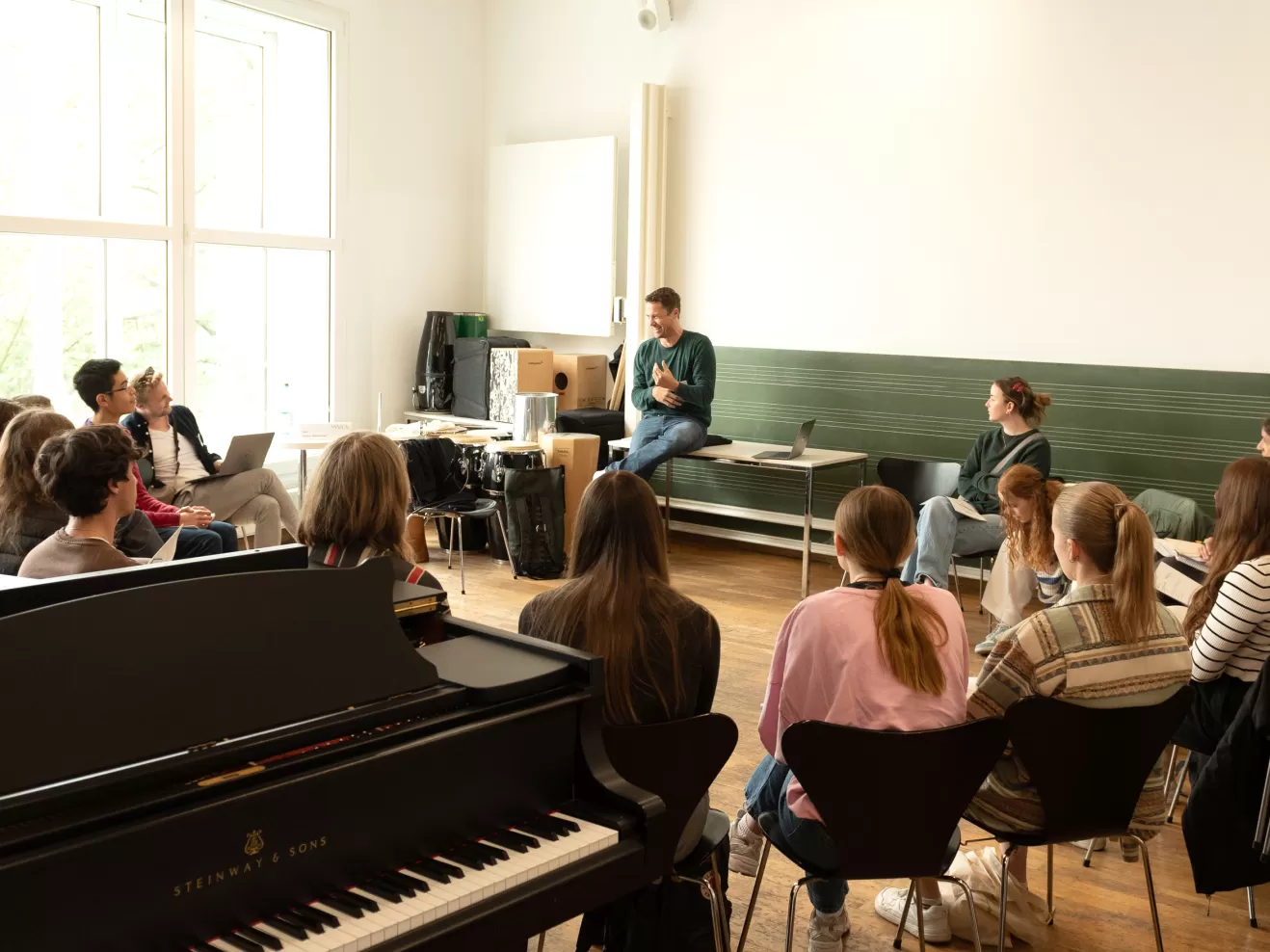
Teaching music in schools
Getting children and young people excited about music is one of the most beautiful and perhaps most demanding educational missions of all: making music together, deepening understanding, igniting fire are challenging and fulfilling tasks in equal measure.
It is about giving pupils an active approach to music. How can they develop their ability to perceive and create? How do they learn to express themselves through and about music and to deal with it in a reflective way?
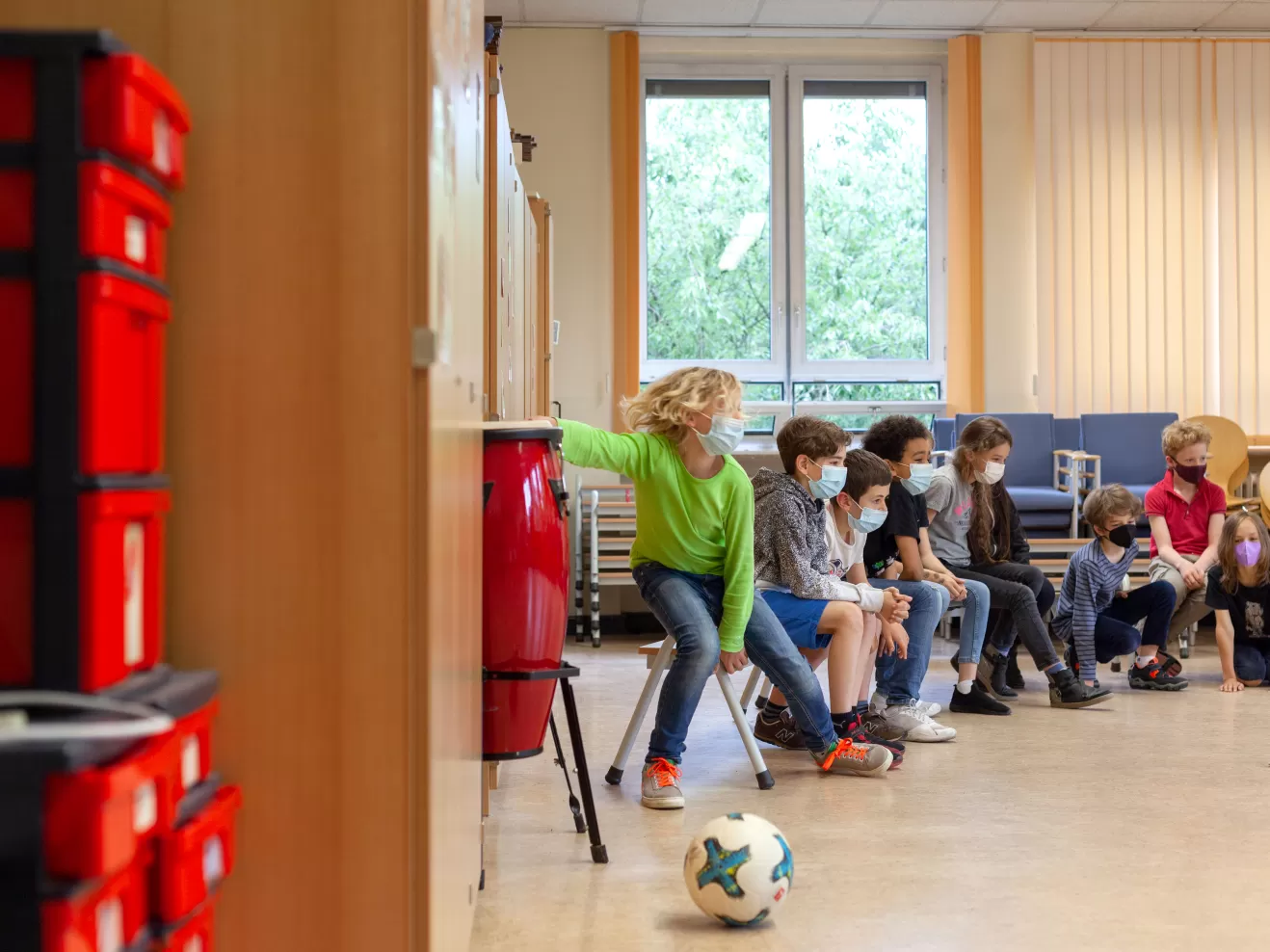
Concepts for all types of schools
At the HfMDK we prepare future teachers intensively for their profession. Our teacher training courses in music for primary schools (L1), secondary schools (L2), grammar schools (L3) and special schools (L5 ) are based on artistic, pedagogical and scientific principles and competences for an open, motivating, pupil- and activity-oriented teaching of music. We always combine practical topics with research.
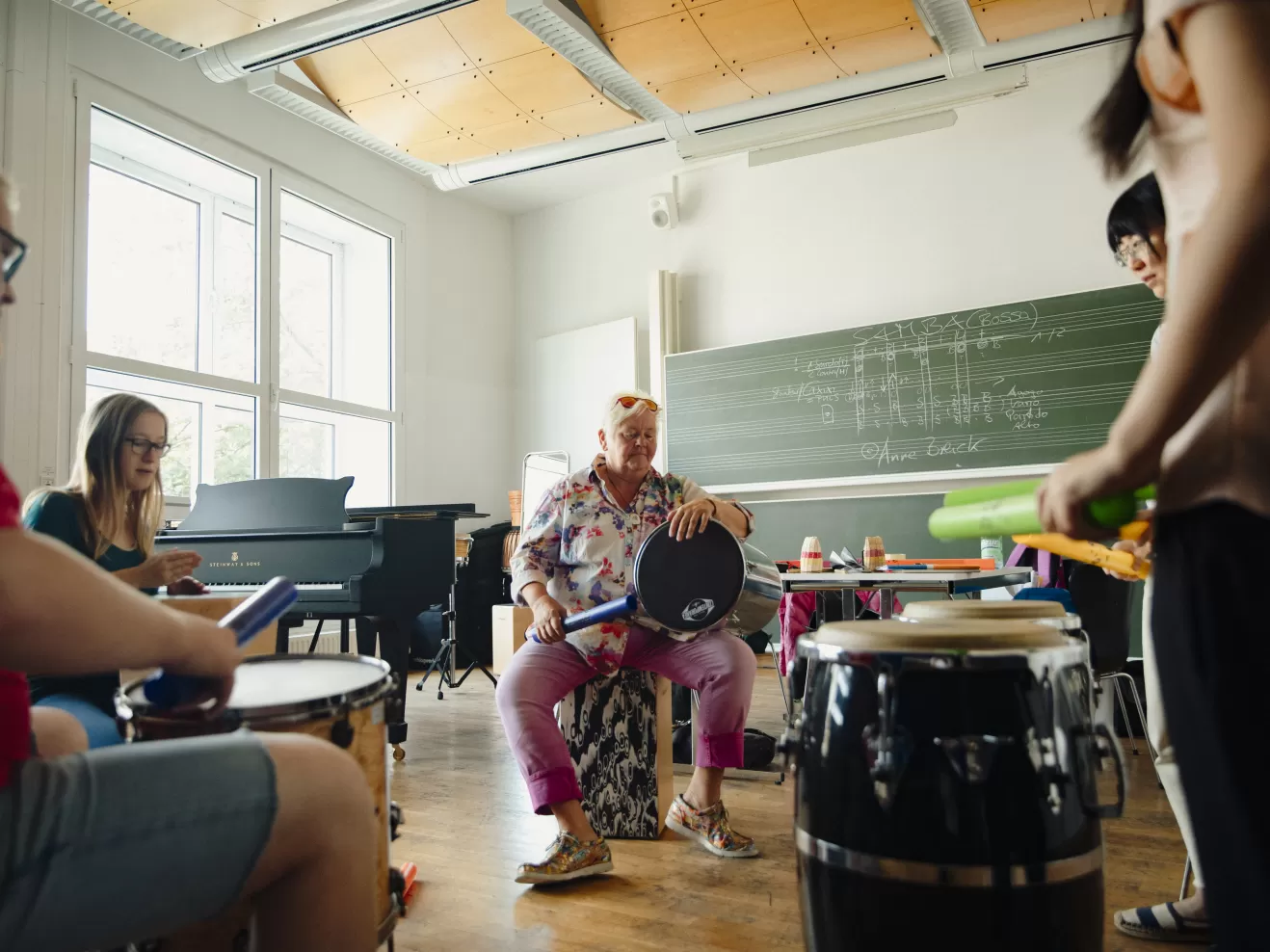
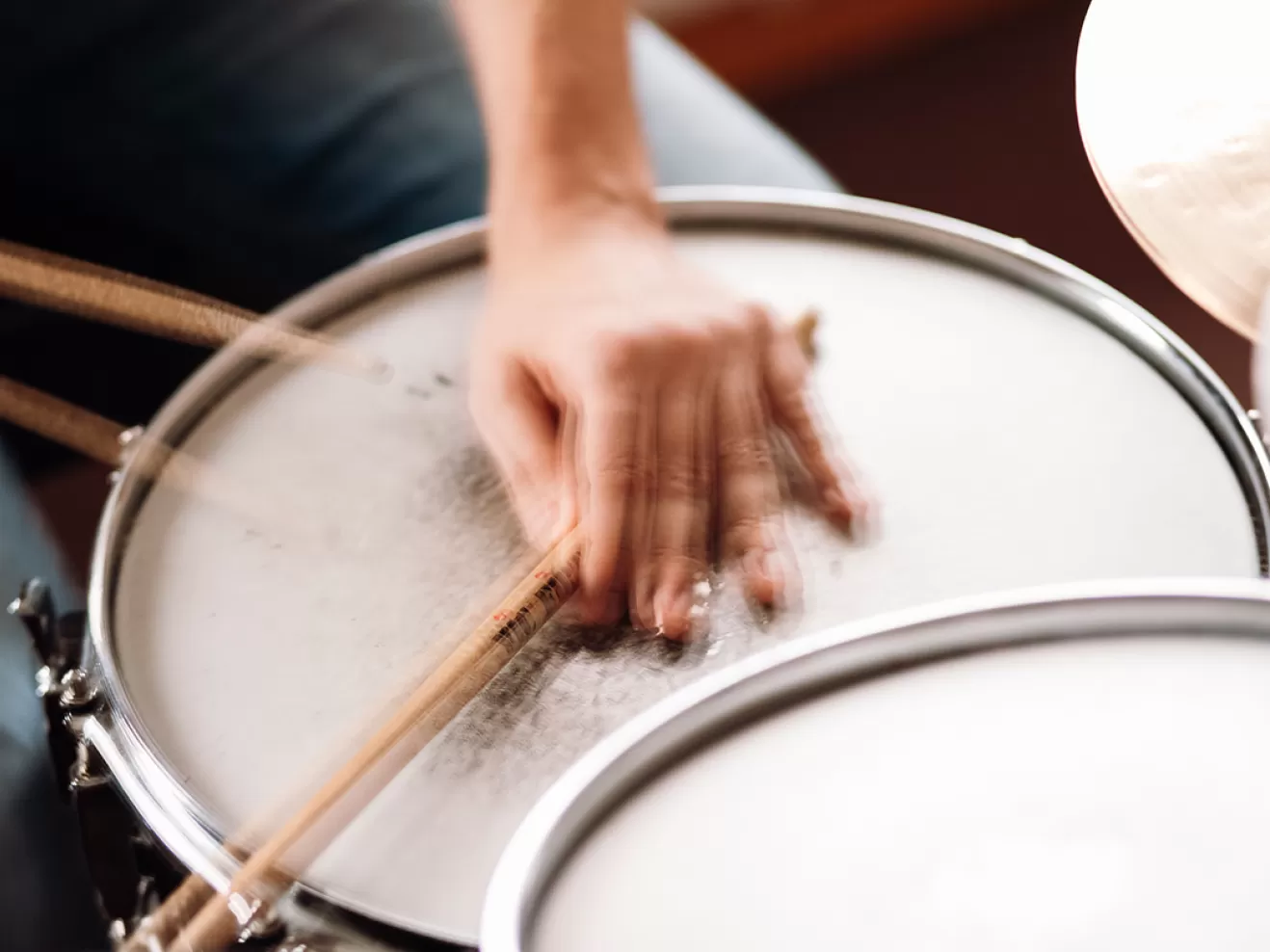
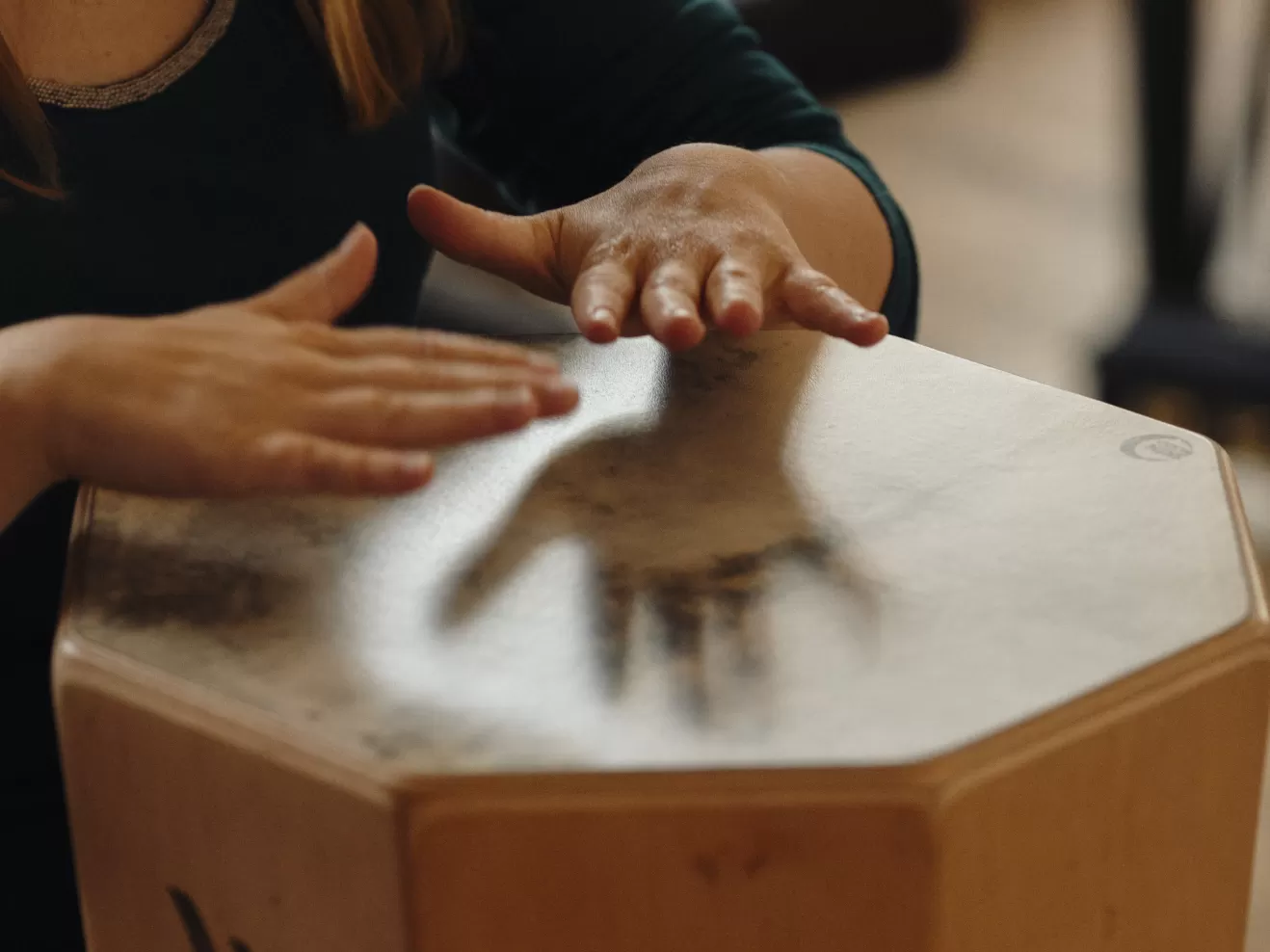
No comparison: everyday student life at an art academy
Teacher training students at the HfMDK move in an environment that is free of pigeonholing. Classical and popular music, historical and current musical cultures, solo work and ensembles, learning and teaching methods, interdisciplinary projects – we address the entire spectrum of music. Students work on their musical perception and their teaching skills. They are given space for reflection and interpretation, and are committed to contributing their topics and talents, even beyond their own studies – for example in the departmental council, in the AStA and in the student parliament. Openness, exchange: this never remains just a goal, it shapes us.
What else distinguishes us as an educational department of a University of Music and Performing Arts? In any case, the abundance of subjects, the high proportion of individual lessons, the many great ensembles founded by students – and our numerous cooperations.