Rieger organ in A 015
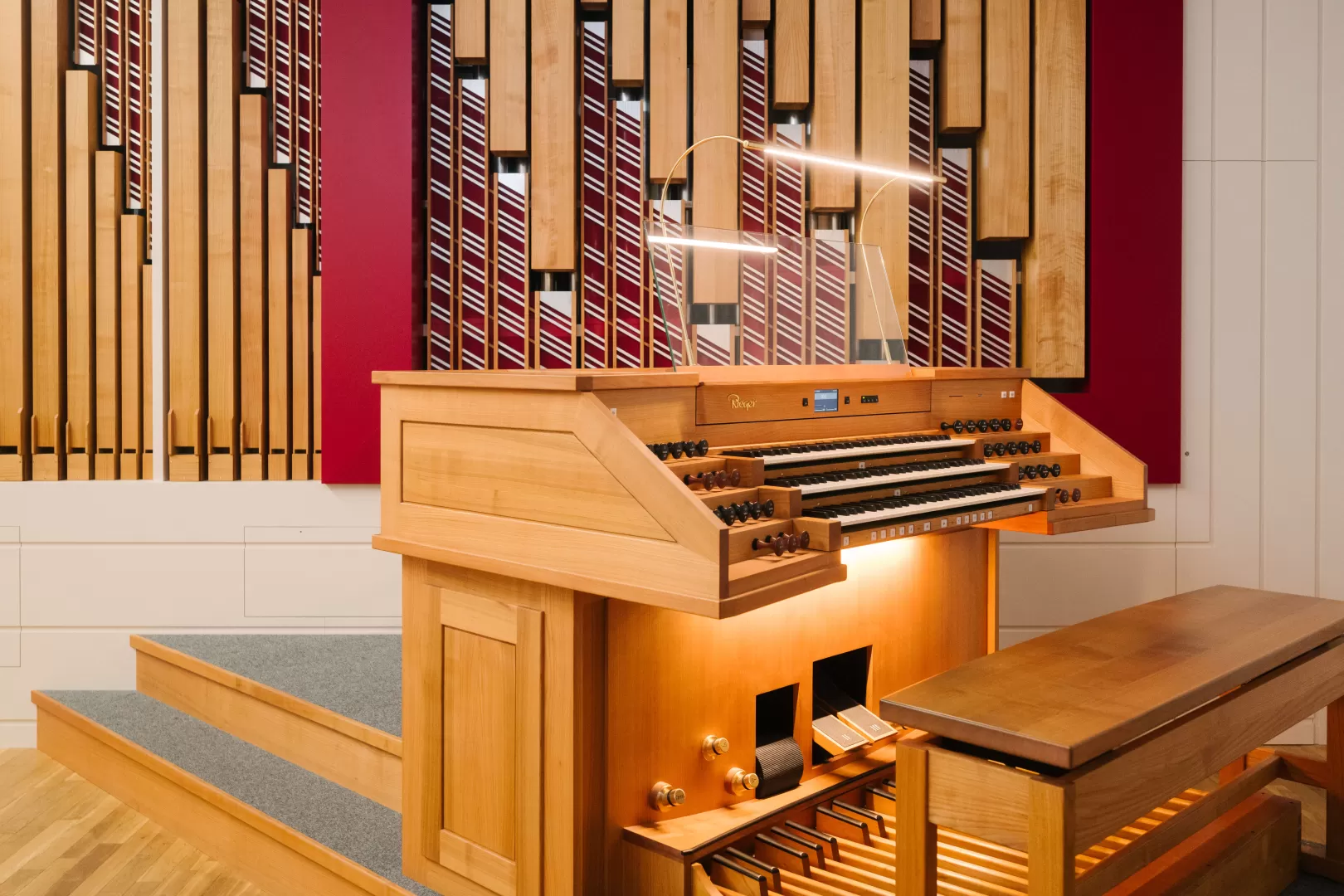
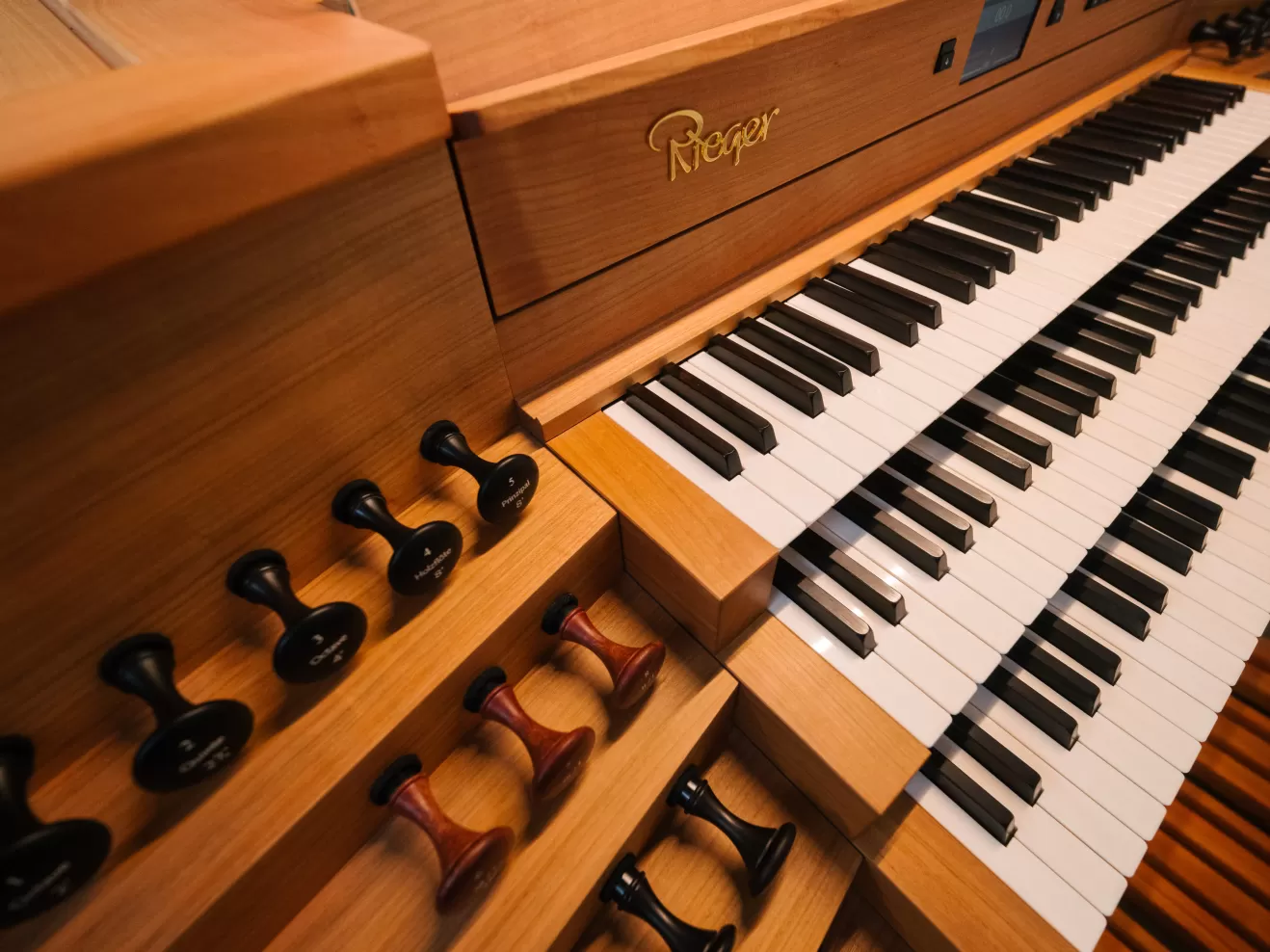
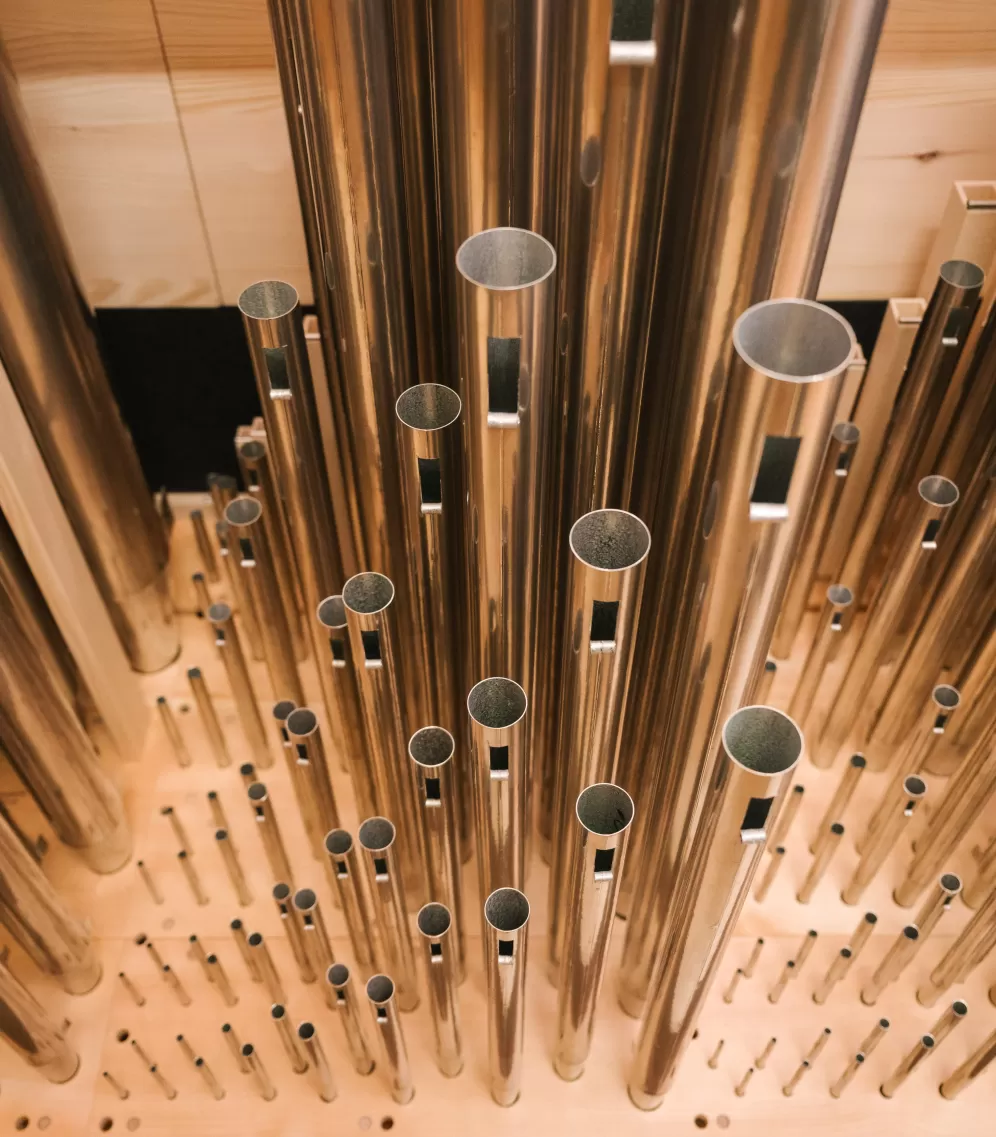
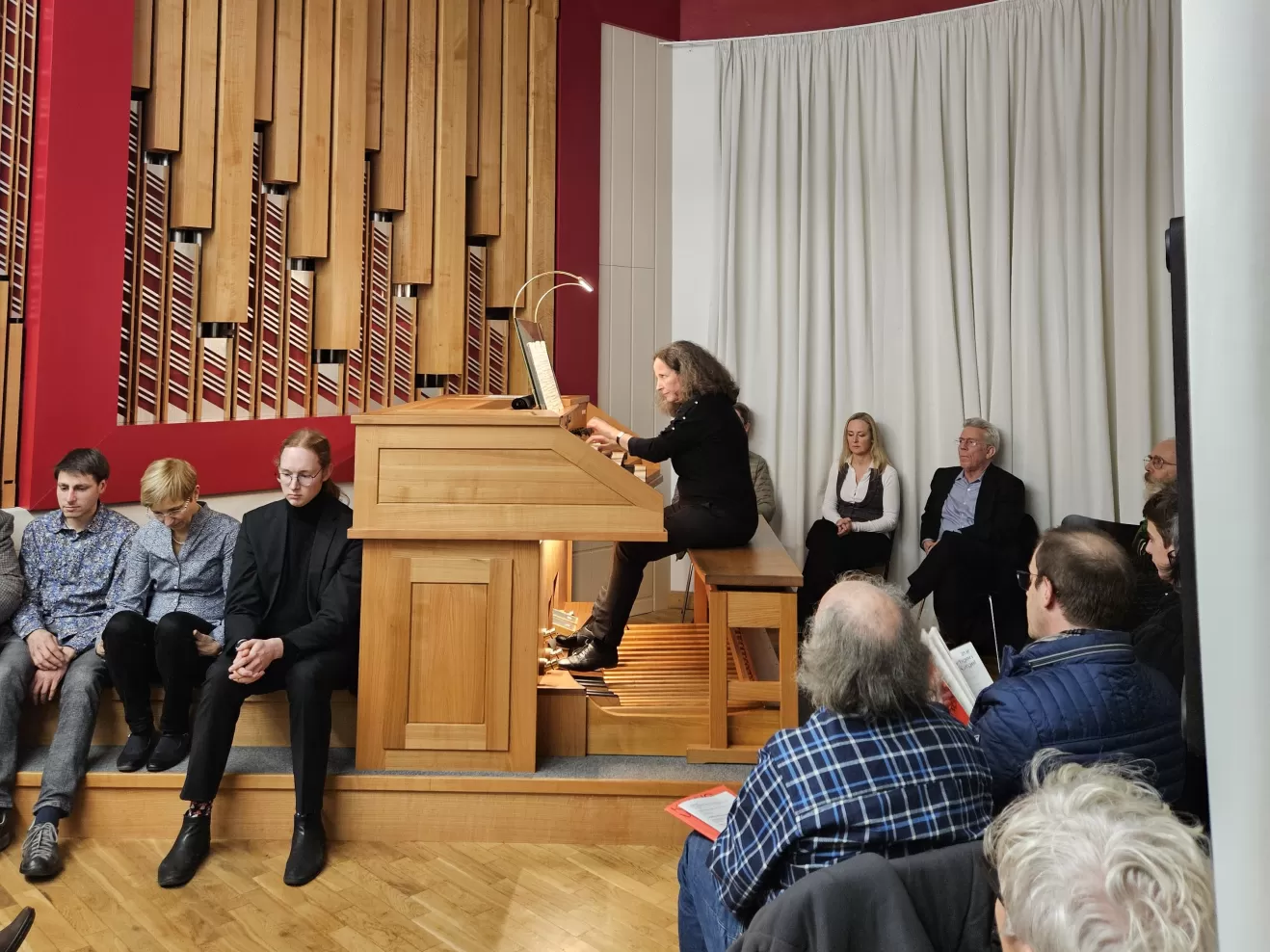
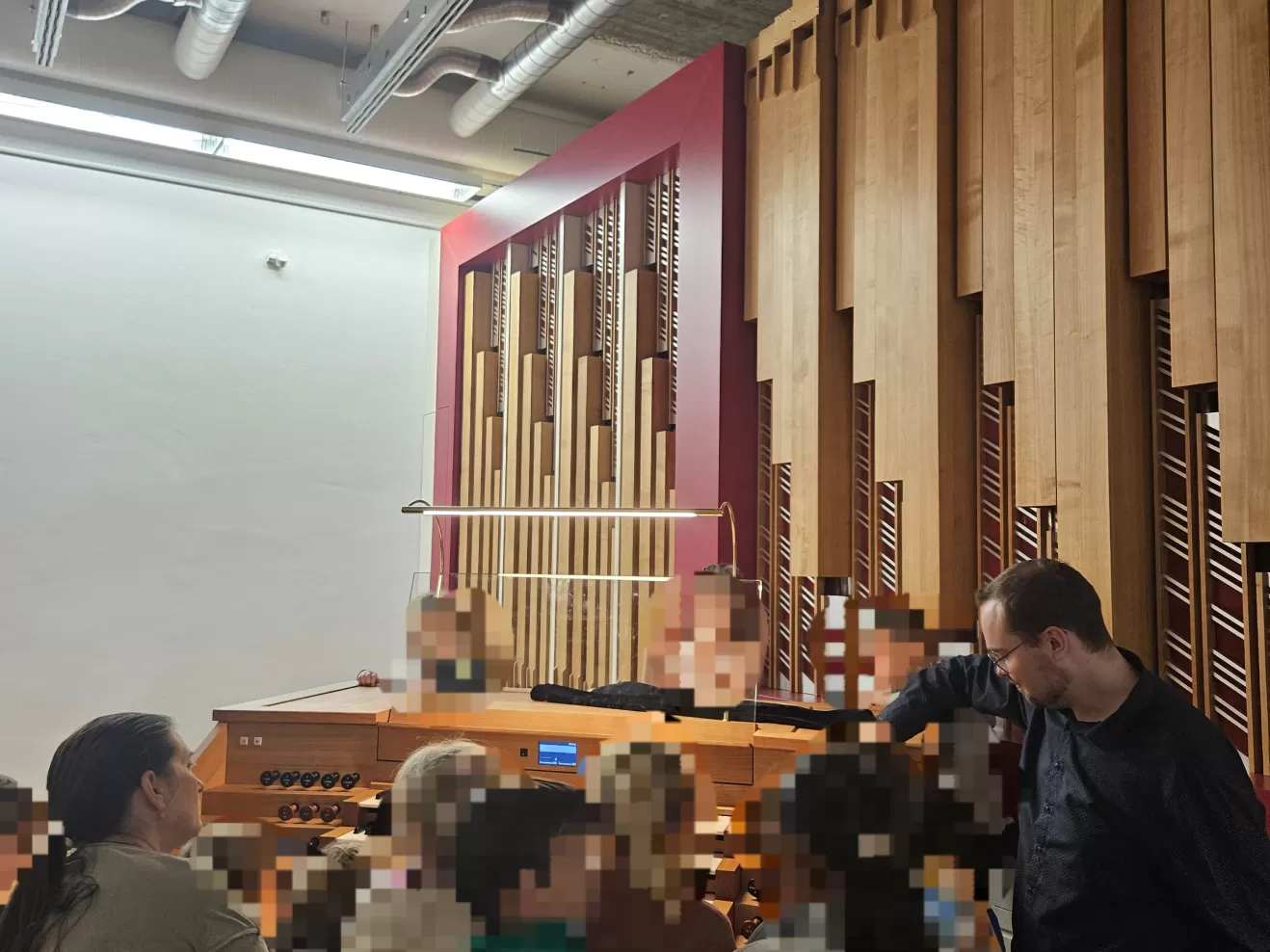
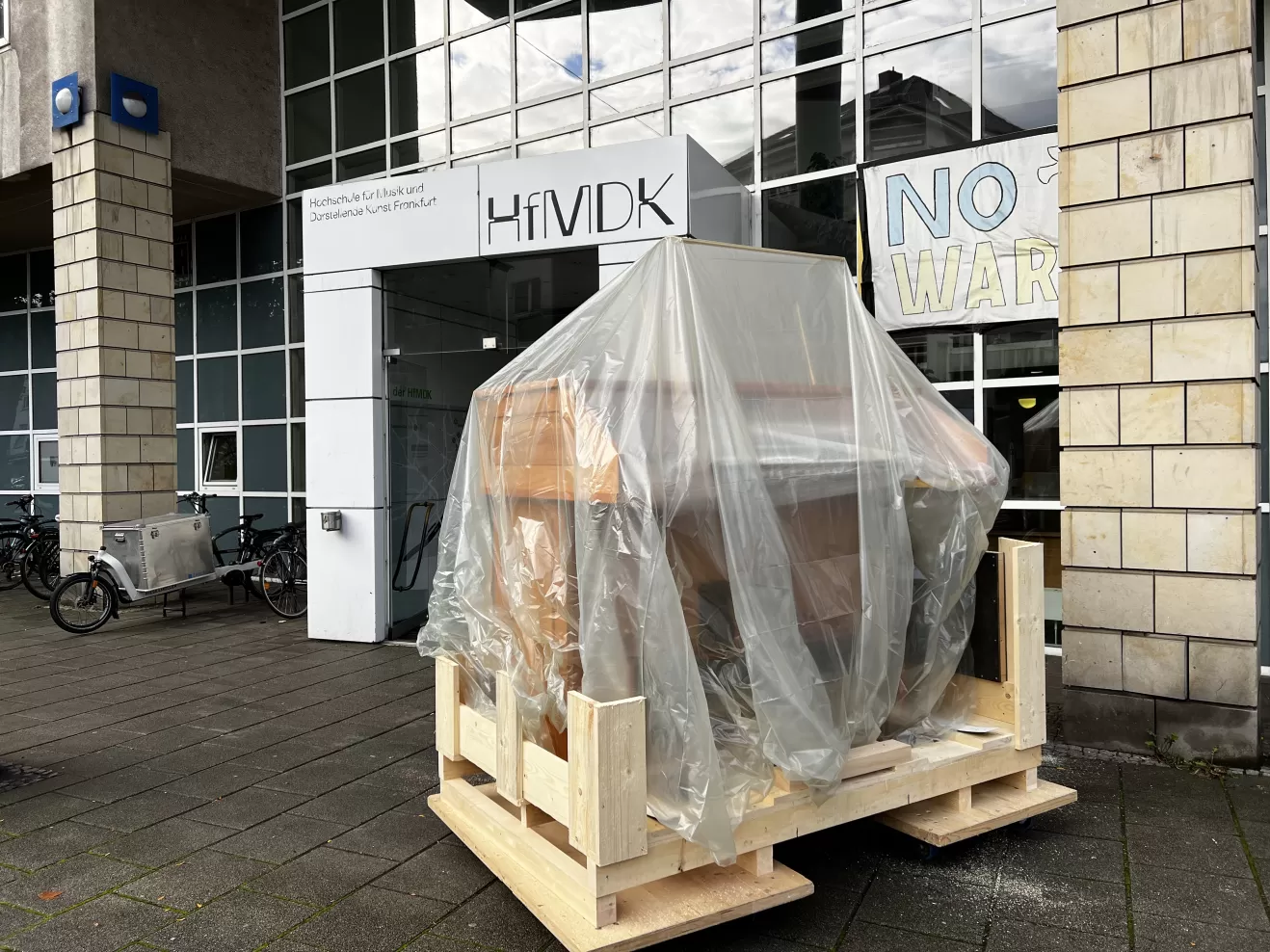
Completed in 2025, the organ by the Austrian company Rieger Orgelbau provides the HfMDK with an instrument that is unique in its conception and sound aesthetics. Developed as a symphonic chamber organ, it combines technical precision, tonal color and acoustic balance in a small space.
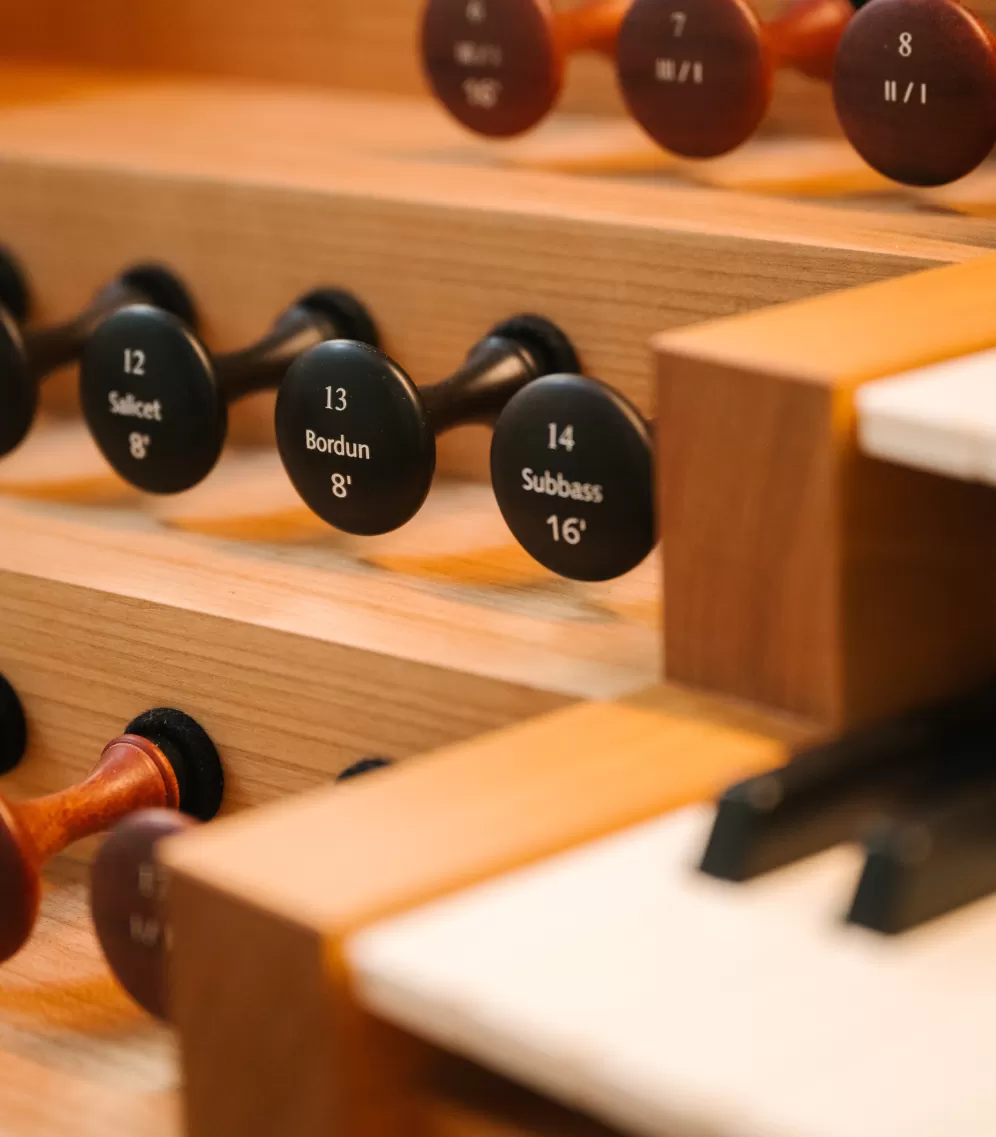
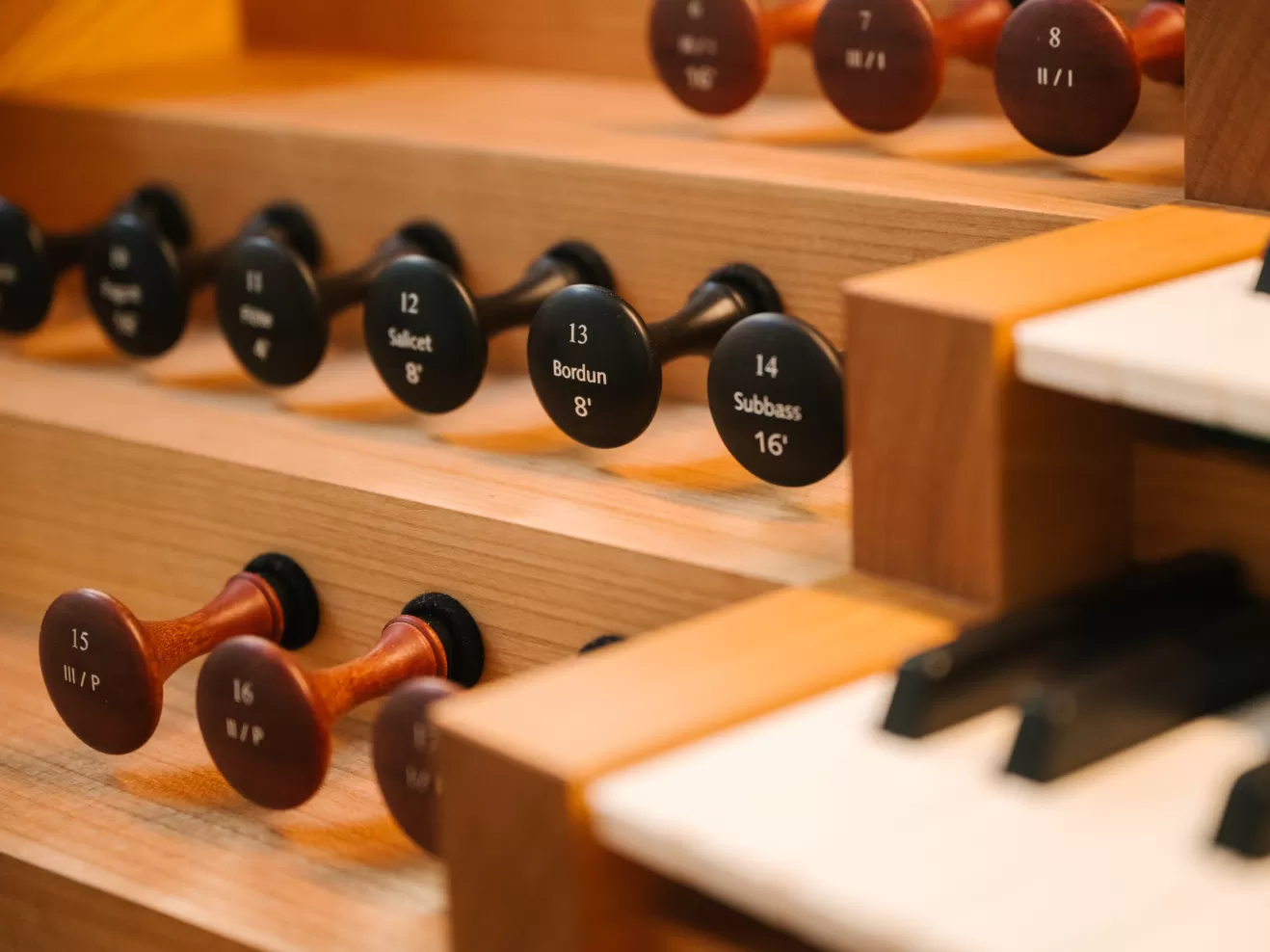
The organ has three manuals and pedal with a total of 21 sounding stops. Despite its compact size, it enables the authentic interpretation of a broad repertoire - especially romantic and modern organ music (including Franck, Widor, Reger, Karg-Elert, Hindemith, Messiaen).
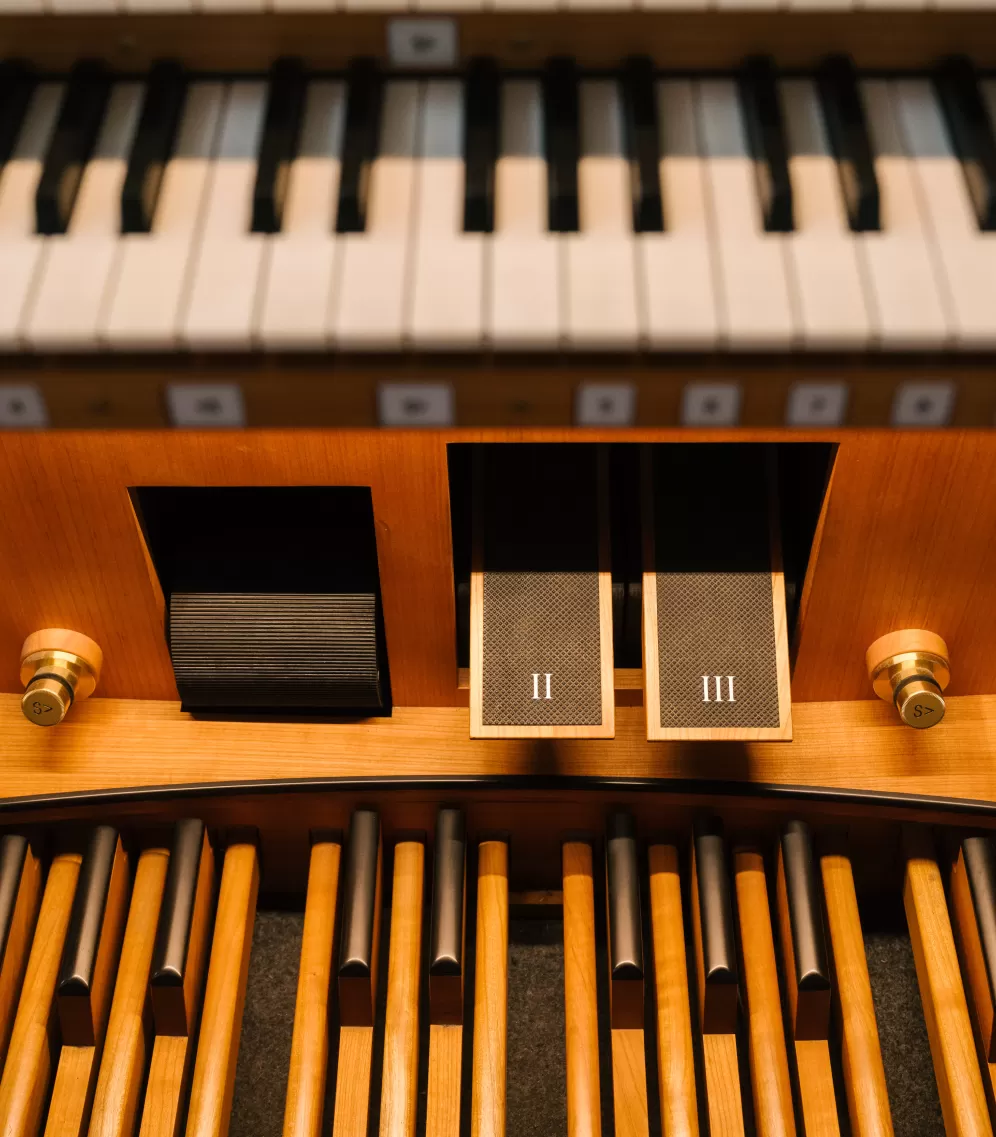
A central feature is the extraordinary dynamic flexibility: the most powerful voices - Mixture and Trumpet - are located in swellable works, the volume of which can be finely nuanced using wooden shutters controlled by the feet. The combination of high wind pressure, closed stops and carefully coordinated scaling creates a sound that is always flexible, never massive. In terms of sound and design, the instrument harks back to the organ building tradition of the 1920s and 1930s - a time in which romantic richness and poetry, quality craftsmanship and the desire for transparency and overtones were in exciting harmony. This idea was translated into the present day for the HfMDK.
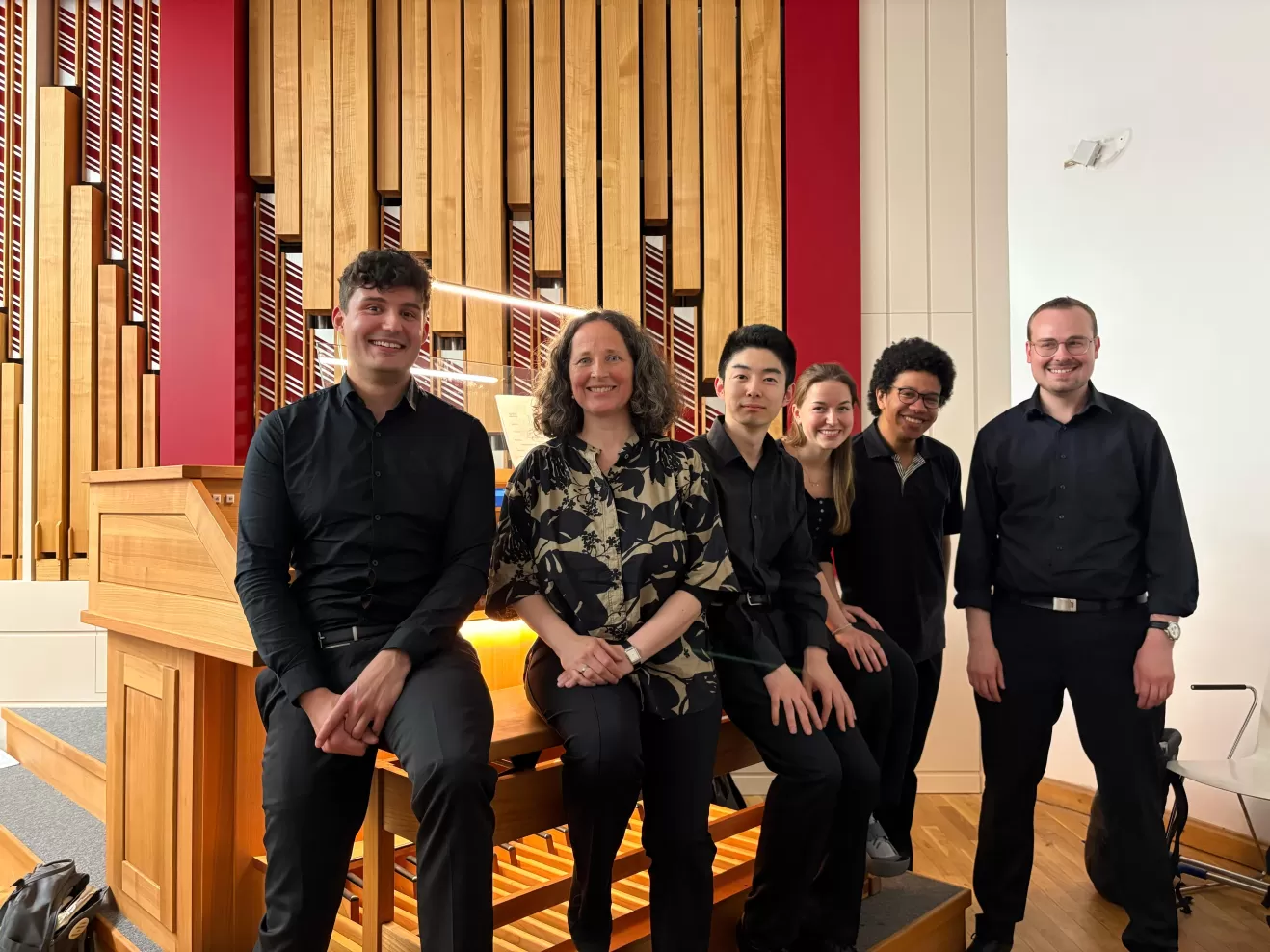
The organ was built by Rieger Orgelbau (Schwarzach/Vorarlberg) under the artistic direction of Wendelin Eberle, Reiner Schuhenn and Stephan Niebler (voicing). It is located in room A 015 and forms the tonal center of organ and church music studies at the university.
The main sponsors of the new teaching organ are the Aventis Foundation and the Crespo Foundation. In addition, the construction of the new organ was kindly supported by the Dr. Hans Feith and Dr. Elisabeth Feith Foundation and the Society of Friends and Sponsors of the HfMDK Frankfurt (GFF).