Finding new ways
The year after Russia's attack on Ukraine - voices from the university.
Natalia Lukianova's new start at the HfMDK Frankfurt began with a message to Prof. Dieter Heitkamp: "When I came to Germany, leaving my homeland, Ukraine, I was lost, shocked and scared, I didn't know what to do and at some point I didn't even know where to live. One day, I came up with the thought that coming back to doing what I love can help me to find myself again. I searched for dance schools and universities in Frankfurt and decided to text Professor Dieter Heitkamp."
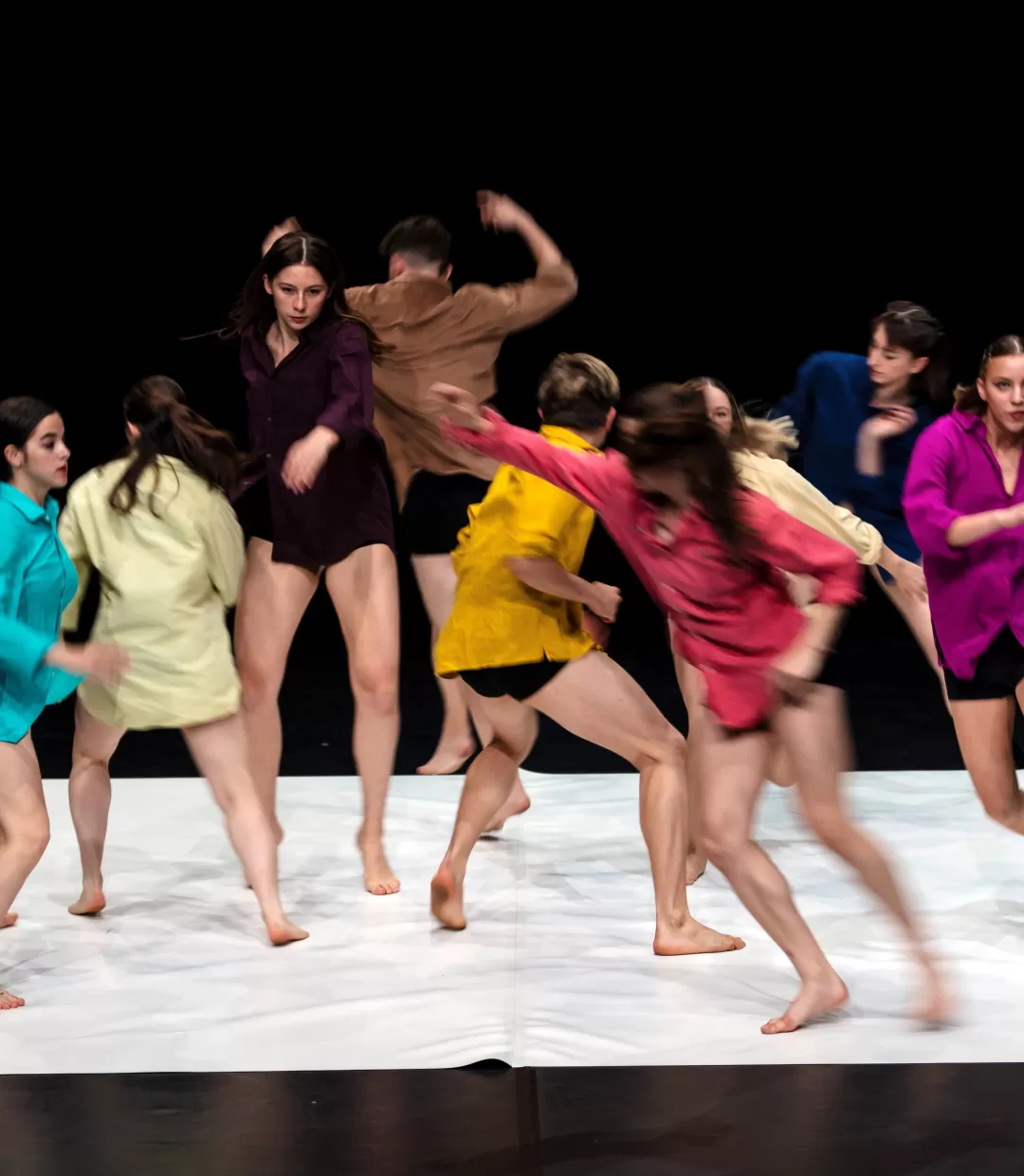
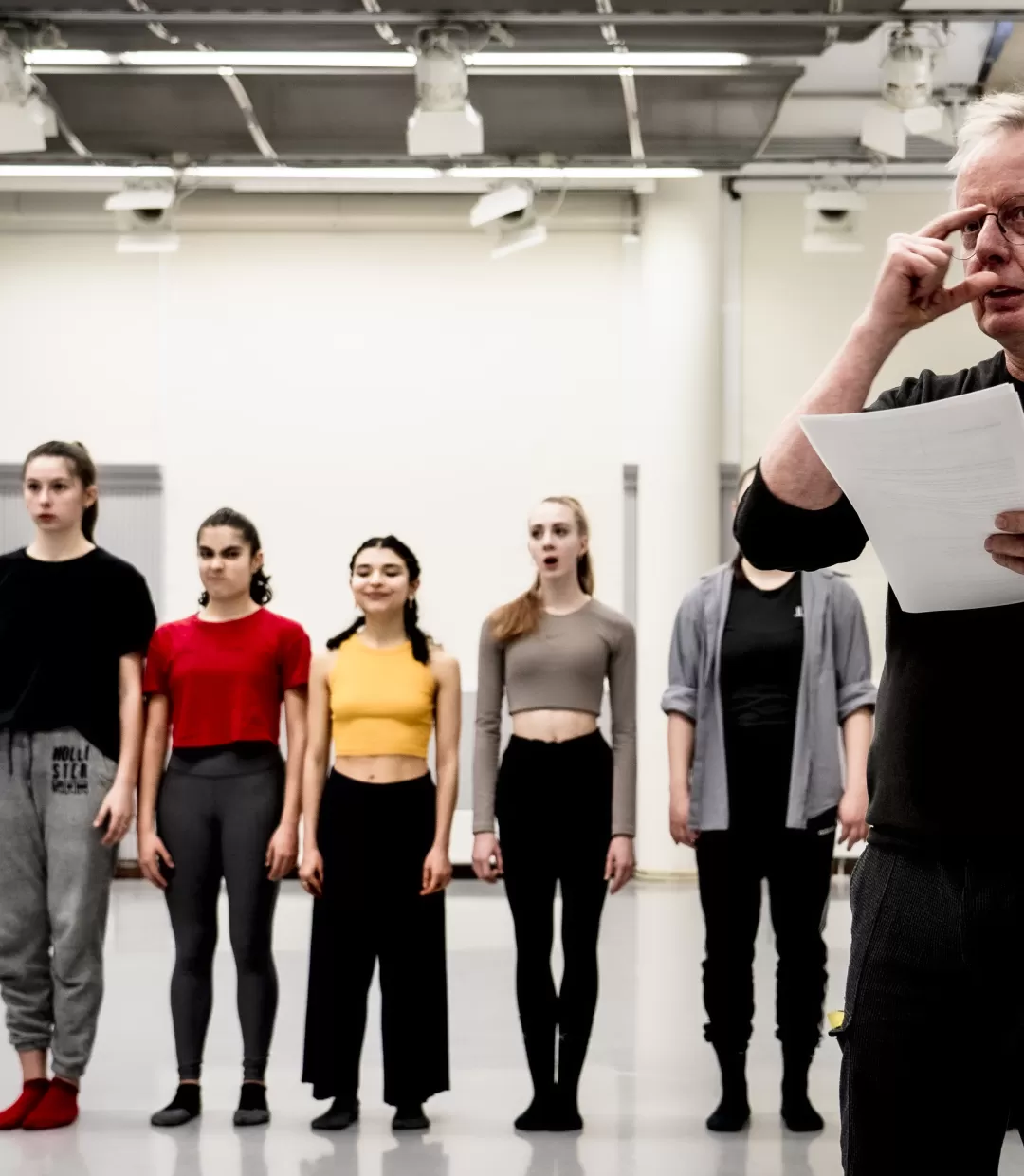
In April 2022 Natalia Lukianova was able to start as a guest student in the dance department: "Since that moment I met so many kind and supportive people, and a lot of good things started happening to me. Being in the school I always feel like a part of the group. I feel support, respect, and openness and I am always surrounded by like-minded and inspiring people."
»I believe that getting into HfMDK is the best thing that happened to me in Germany. I kind of often joke that it was destiny. Because only the school and the support which people there gave me, helped me to come back to myself, calm down and continue living. This experience changed me so much not only as a dancer but also as a person.«Natalia Lukianova
Hope for normality
When students like Natalia arrived in Frankfurt at the HfMDK, Silke Hennen and Friederike Kreft from the Student Services department saw ideas turn into processes and e-mails into faces from one day to the next: "We were in contact with young people who were holding out at border crossings, looking for housing in Frankfurt and the surrounding area, or who came to our university full of hope for some normality. It was turbulent and sometimes chaotic, but always a joint process in which we also learned a lot and had positive experiences."
»When we look back on 2022, we can think of many moments when we were able to help, when we were at a loss, and also moments when we needed support ourselves. At the HfMDK, doors have opened for young people from Ukraine. Finding ways was sometimes a challenge.«Silke Hennen (Head of Student Services) and Friederike Kreft (International Office)
Ukraine Aid Fund
Finding ways: The financial support of the Friends and Sponsors of the HfMDK also helped with that. From the newly established Ukraine Aid Fund, it was possible to finance grants for the Ukrainian students: for individual lessons or correpetition, for Mensa cards with value credits, the assumption of semester fees and for the procurement of loan laptops and other equipment. Around EUR 15,000 has been spent on this so far. In addition, the GFF office has arranged private rehearsal and housing opportunities as well as mentors for the young artists, for example when dealing with authorities.
We would like to thank all private donors and the Rotary Club Frankfurt am Main-Taunus for their generous support of the refugee students from Ukraine, who were able to find a new artistic home at the HfMDK.
Since the beginning of the war, a total of 20 refugee students have been accepted at the university. As guest students, they receive lessons on instruments, in singing, acting and dance, and if required, also German lessons.
»Our university helps refugee students wherever we can with our profile and capacities. I would like to thank the colleagues and students who, in addition to their existing tasks, are showing great commitment in helping and coordinating.«Prof. Elmar Fulda, President of the HfMDK
The guest students receive certificates for their academic achievements, which should enable them to be recognized in a subsequent regular course of study. In addition, they can use the wi-fi, the practice rooms and the library. Some of them have since applied for regular studies at the HfMDK.
This offer could only be implemented through the voluntary commitment of numerous teachers, employees from the administration and students.
Accompany future plans
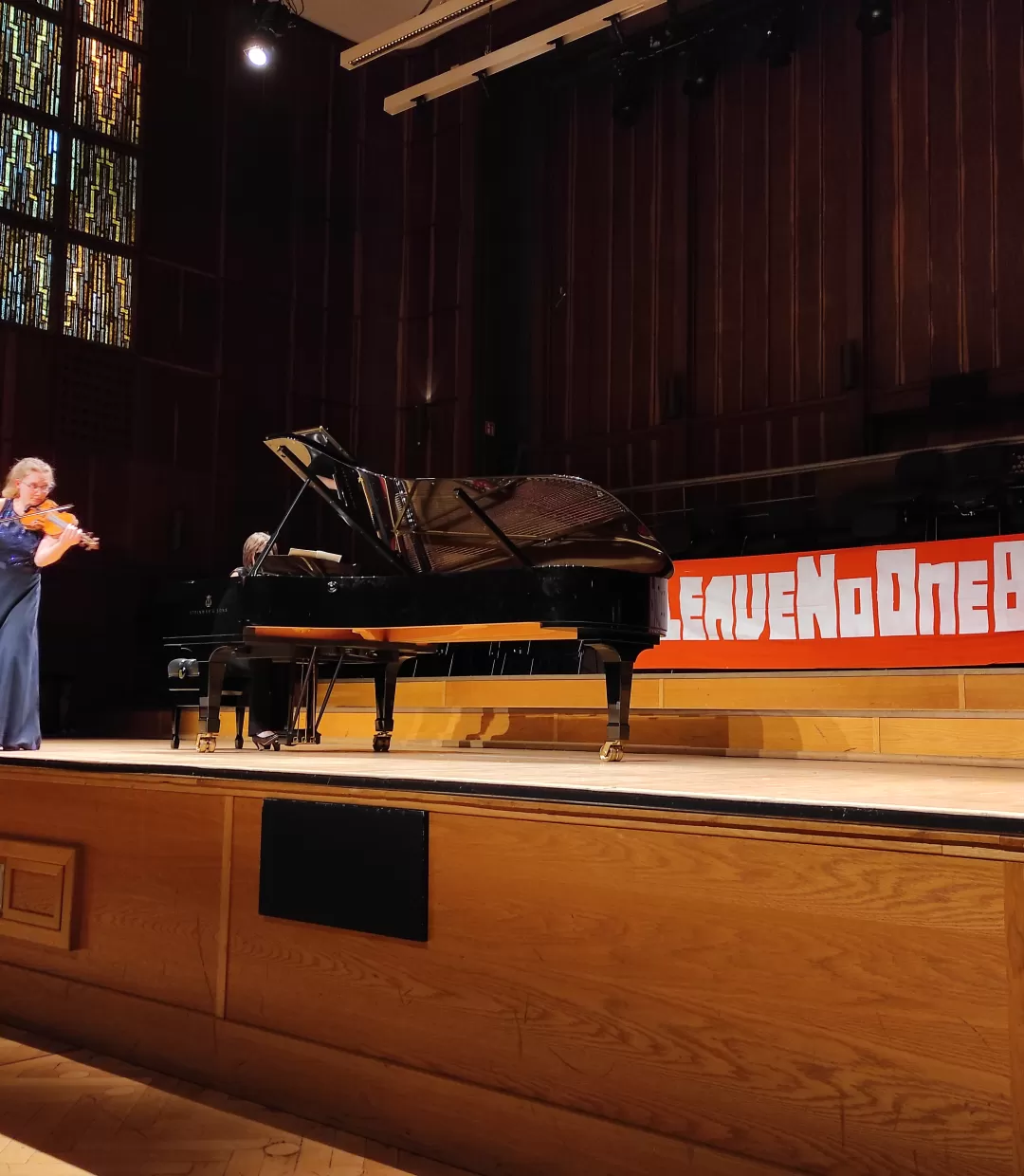
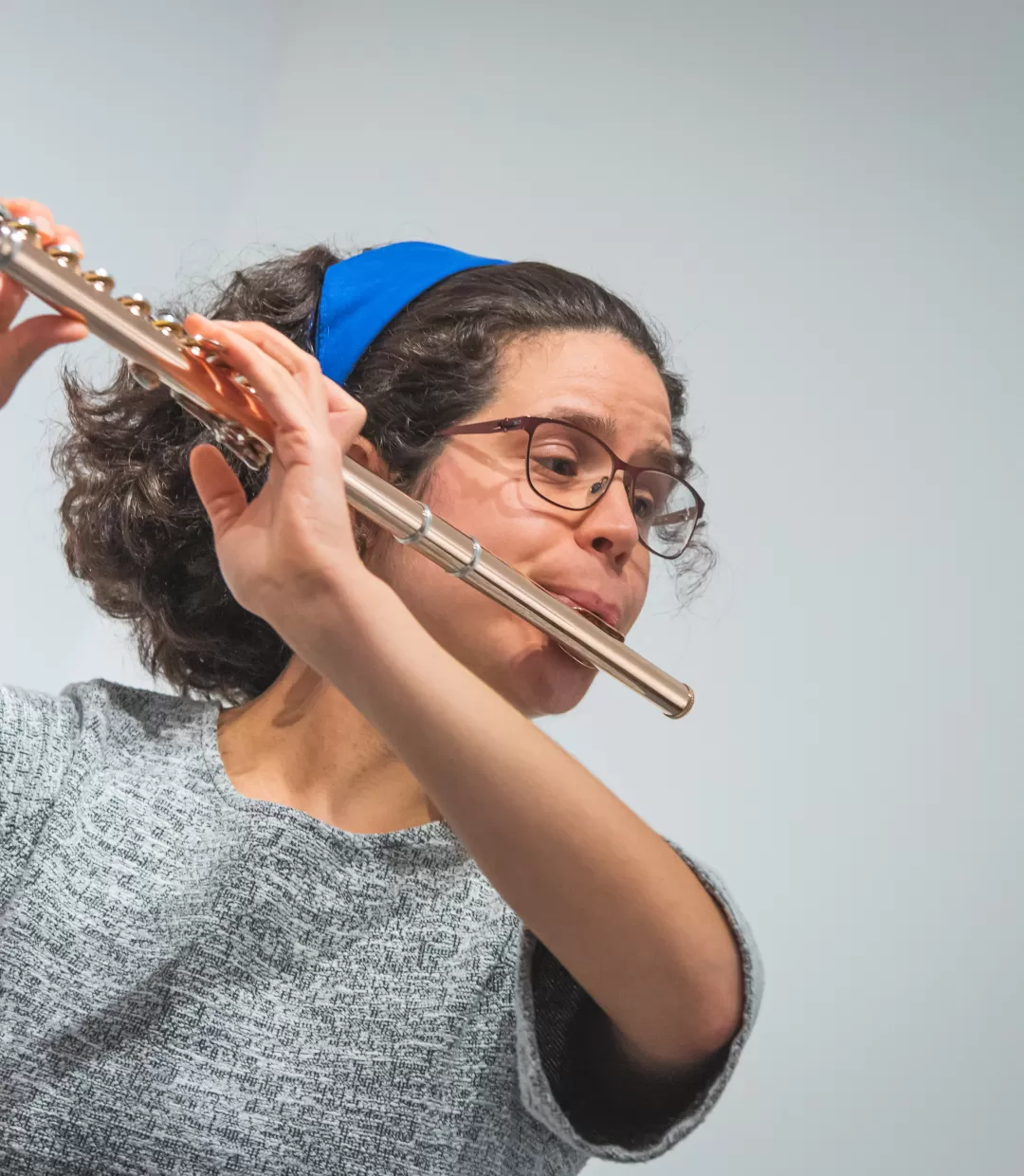
Léa Villeneuve is currently studying transverse flute and historical interpretation practice (HIP) at the HfMDK in the master's program Instrumental Pedagogy. She has long been involved with refugees both inside and outside of her daily university life, including in the #LeaveNoOneBehind working group.
Shortly after the war began, Léa Villeneuve accompanied a young flutist from Ukraine, who had fled with her aunt, on her new start in Frankfurt: "I organized a rehearsal room for her, gave her free lessons once a week, took her to a flute ensemble at the music school where I work, talked to her about her situation and future plans. I really wanted to make sure she continued to keep her passion for music as a point of reference, since she had left virtually everything behind except her instrument."
»The more interlocked the cultural exchange between citizens of different countries is, the less likely alienation in crises should be. It is important to me to set new impulses on the local level, on the stage and in everyday life, however small they may be. The solidarity that society has shown with Ukrainian refugees should also apply to refugees from all countries.«Léa Villeneuve
In the winter semester, the young Ukrainian passed the entrance exam at Dr. Hoch's Conservatory. Léa Villeneuve is still in contact with her and her aunt: "It's a long-term commitment, after all."